This content was prepared by the Turan Turan Editorial Board and medically approved by Op. Dr. Kayhan Turan.
Op. Dr. Kayhan Turan — Orthopedics and Traumatology Specialist | Founder & President of ROCD
Chronic hip pain can gradually take over your life, turning simple pleasures into difficult chores. Activities like walking, climbing stairs, or even getting a good night’s sleep can become constant struggles due to persistent discomfort. If you find yourself planning your day around hip pain, you are not alone.
Hip replacement surgery, also known as hip arthroplasty, is a highly successful and common procedure that restores mobility and provides significant pain relief for individuals with severe hip joint damage.
For many, it is a transformative journey that has helped millions of people reclaim activities and freedoms they thought were lost. Whether your goal is to walk without a limp, play with your grandchildren, or return to a favorite hobby, this surgery can help you achieve those personal milestones.
For international patients traveling to Turkey for care, understanding your surgical options and the hip replacement recovery process is the first step in this journey. In this guide, we will explore:
- What the surgery involves.
- When a replacement becomes necessary.
- The different types of procedures and surgical approaches available.
- What to expect during the recovery timeline.
Table of Contents:
- What is Hip Replacement Surgery?
- When is a Hip Replacement Necessary?
- Common Conditions That Lead to Hip Replacement
- Understanding the Types of Hip Replacement
- Surgical Approaches: Choosing the Right Path
- Step-by-Step: How is Hip Replacement Surgery Performed?
- Conclusion: Reclaiming Your Active Life
- Hip Replacement Recovery Timeline: What to Expect
What is Hip Replacement Surgery?
Hip replacement, also known as hip arthroplasty, is a life-changing procedure where a surgeon replaces a worn-out or damaged hip joint with a high-tech artificial one. The goal is simple: to stop the pain and help you move freely again.
Think of your hip as a “ball-and-socket” joint:
- The Ball: The top of your thigh bone (femoral head).
- The Socket: A cup-shaped space in your pelvis (acetabulum).
When these parts rub together without protection (articular cartilage), it causes the “bone-on-bone” pain that many patients feel. An artificial joint, called a prosthesis, is designed to mimic your body’s natural, smooth movement.
The hip replacement components
Your new hip is made of four primary parts, built from materials like titanium, ceramic, or specialized medical plastics that are designed to last for decades:
- The Stem: A sturdy metal piece that fits securely into your thigh bone.
- The Ball: A smooth ceramic or metal ball that sits on top of the stem.
- The Shell: A metal “cup” that fits into your pelvic socket.
- The Liner: A durable plastic or ceramic insert that goes inside the shell, allowing the ball to glide smoothly.
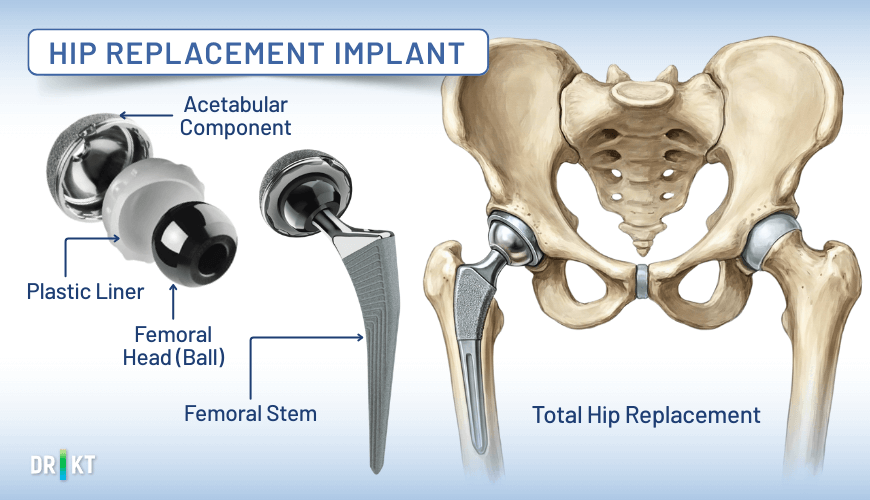
To hold these parts in place, surgeons either use “bone cement” or a special “uncemented” coating that allows your natural bone to grow into the implant for a permanent bond. Surgeons may also use a hybrid approach, combining both techniques for different components.
Advanced Safety: Protecting Your Nerves
For many international patients, safety is a top priority. During the procedure, we often use neuromonitoring. This is like having a “GPS for your nervous system.” It provides the surgical team with real-time information about your nerves throughout the operation. By using this nerve-monitoring device, we can significantly reduce the risk of leg weakness and ensure the highest level of safety for your recovery.
When is a Hip Replacement Necessary?
The decision to have a hip operation replacement isn’t just about an X-ray; it’s about how much of your life you are missing out on. Doctors usually suggest surgery when your pain significantly limits your daily activities and non-surgical treatments—like physical therapy or anti-inflammatory medicine—no longer provide relief.
Signs You Need a Hip Replacement
If you find yourself planning your entire day around your hip pain, you aren’t alone. Common hip replacement symptoms that suggest it’s time for a change include:
- Persistent Pain: Discomfort that keeps you awake at night or hurts even when you are resting.
- Stiffness: Difficulty with simple movements like bending over, putting on your shoes, or rising from a chair.
- Mobility Struggles: Trouble walking short distances, navigating stairs, or having a noticeable limp.
- Lifestyle Impact: Feeling forced to give up hobbies, socializing, or work because of your hip.

Am I Too Young for Surgery?
A common myth is that hip replacements are only for the elderly. In reality, the need for surgery is determined by your level of pain and disability, not your age.
Thanks to modern technology, today’s hip replacement components are incredibly durable and are expected to last 15 years or more. If a younger person’s active life is being stolen by joint damage, they are often excellent candidates for the procedure, allowing them to return to the sports and activities they love.
Common Conditions That Lead to Hip Replacement
Several conditions can cause the severe joint damage that makes a hip replacement operation necessary. While there are many reasons a hip might wear out, these are the most common:
- Osteoarthritis: This is the “wear and tear” type of arthritis and the most frequent reason for surgery. It happens when the slick cartilage—the cushion between your bones—wears away, leading to painful bone-on-bone friction.
- Rheumatoid Arthritis: An autoimmune condition where the body’s immune system mistakenly attacks the joint lining. This causes chronic inflammation that can eat away at the cartilage and the bone itself.
- Avascular Necrosis (Osteonecrosis): Think of this as “bone starvation.” If the blood supply to the “ball” of your hip (femoral head) is cut off, the bone can weaken and eventually collapse, destroying the joint’s shape.
- Developmental Dysplasia (DDH): Sometimes, the hip joint doesn’t form correctly during infancy. The ball fits loosely in the socket, causing uneven wear that leads to early-onset arthritis in adulthood.
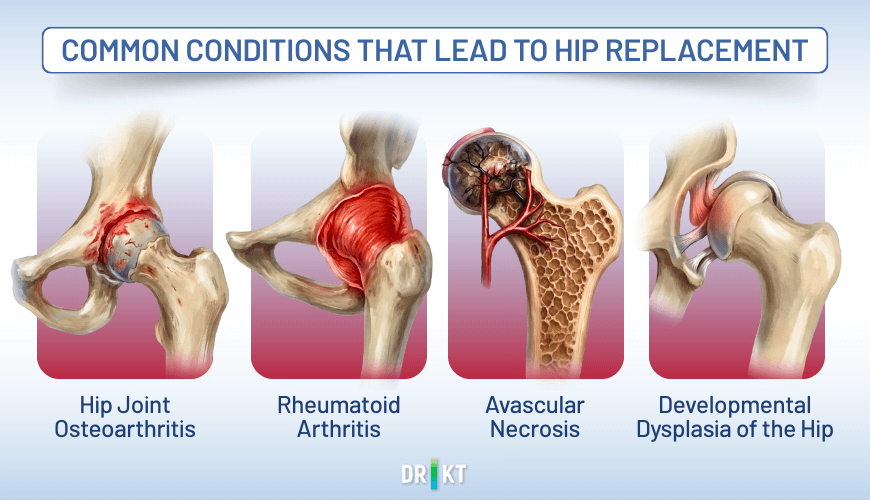
When non-surgical treatments like medicine or physical therapy fail to relieve the pain from these conditions, a hip replacement is a proven, effective way to reclaim your quality of life.
Understanding the Types of Hip Replacement
Not all hip surgeries are the same. Your surgeon will recommend the most appropriate procedure based on your age, the strength of your bones, and how active you want to be after recovery.
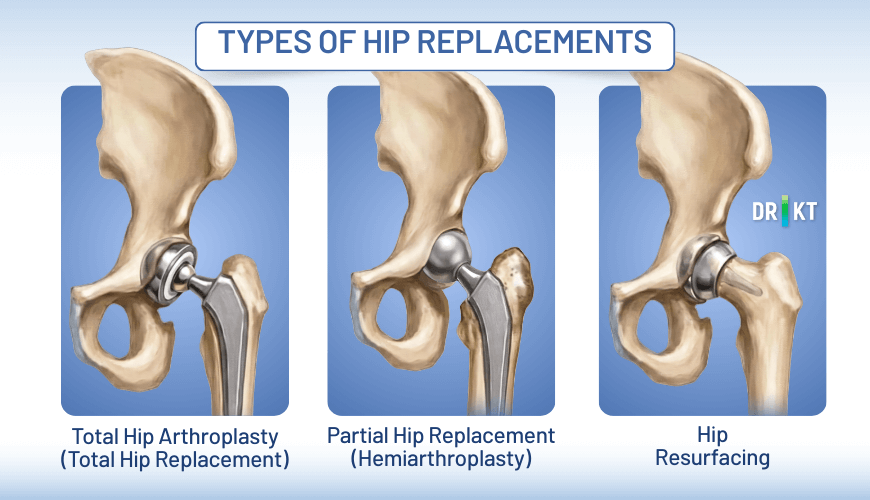
Total Hip Arthroplasty (Total Hip Replacement)
Total hip replacement surgery is the most common and successful type of hip surgery. During a total hip arthroplasty, both the “ball” and the “socket” of the joint are replaced with durable artificial parts. It is typically the standard treatment for conditions such as osteoarthritis, in which the entire joint has worn down.
Partial Hip Replacement (Hemiarthroplasty)
In a partial hip replacement, or hemiarthroplasty, only the “ball” (the femoral head) is replaced, while your natural socket is left alone. This is typically recommended for older patients who have suffered a hip fracture but still have a healthy, undamaged socket.
Hip Resurfacing
This is a bone-preserving alternative often used for younger, very active patients with strong bones. Instead of removing the entire femoral head, the surgeon simply trims and “caps” it with a smooth metal covering. While it allows for high activity levels, it isn’t the right choice for everyone.
Revision Hip Replacement
A revision surgery is performed when an artificial hip joint that was put in years ago has worn out, loosened, shifted, or become damaged. While modern implants are very durable, they can eventually wear down after many years of use. In revision surgery, the surgeon replaces the old parts with new ones to restore the hip’s function.
Surgical Approaches: Choosing the Right Path
During a hip replacement surgery, your surgeon can reach the hip joint from different directions. The method they choose is called the “surgical approach.” This choice can affect your initial recovery time and the extent to which the surrounding muscles are disturbed.
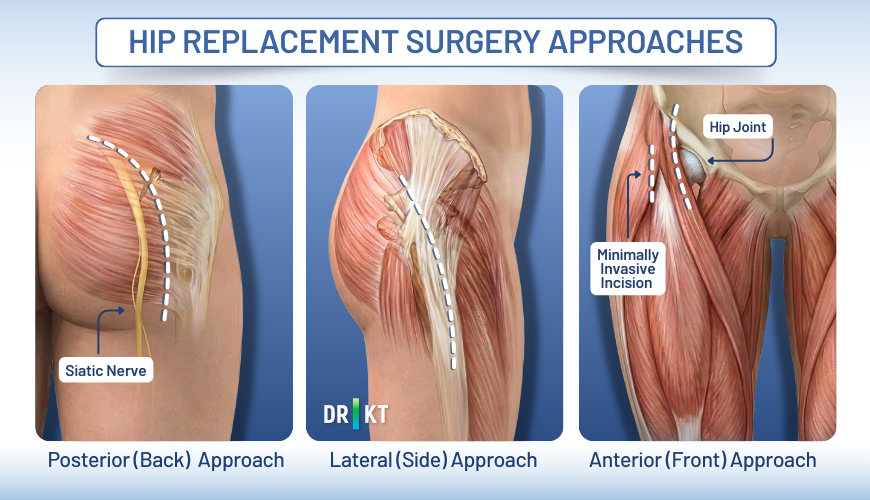
Anterior Hip Replacement (Front Approach)
Often referred to as “muscle-sparing,” anterior hip replacement surgery involves a small incision at the front of the hip.
- The Benefit: Instead of cutting through muscles, the surgeon works between the natural gaps in the muscle tissue.
- The Result: Patients often experience less pain immediately after surgery, a faster initial recovery, and a lower risk of the new joint dislocating.
Posterior Hip Replacement (Back Approach)
This is the most widely used and traditional method. The incision is made on the side of the hip, curving toward the buttock.
- The Benefit: This approach gives the surgeon a wide, clear view of the entire hip joint, which is very helpful for complex cases.
- The Result: While the surgeon may need to split some muscles to reach the joint, they are carefully repaired at the end of the procedure.
Lateral Hip Replacement (Side Approach)
The lateral approach involves an incision on the side of the hip. It is a reliable method that provides excellent stability for the new joint and is often used by surgeons who prefer a direct side-view of the anatomy.
Regardless of the path chosen, the ultimate goal is the same: a stable, pain-free joint that feels natural. Your surgeon will select the best approach based on your unique anatomy and health history.
Step-by-Step: How is Hip Replacement Surgery Performed?
A standard hip replacement surgery typically takes between one and two hours. Here is a look at what happens behind the scenes to give you a pain-free joint:
- Preparation and Anesthesia: You will receive anesthesia to ensure you are comfortable and pain-free. This might be general anesthesia (where you sleep) or a spinal block that numbs the lower half of your body.
- The Incision: The surgeon makes an incision over the hip to access the joint. The length and location of this incision depend on the surgical approach (Anterior or Posterior) chosen for you.
- Preparing the Socket: The surgeon removes damaged cartilage and bone from the hip socket (acetabulum). A new, durable metal shell is then fitted into the pelvic bone.
- Fitting the New Ball and Stem: The damaged “ball” (femoral head) is removed. The surgeon then prepares the inside of your thighbone to hold the new metal stem. A smooth ceramic or metal ball is attached to the top of this stem.
- The Final Stability Test: Once the hip replacement components are in place, the surgeon moves your leg in different directions to ensure the new joint is stable, moves smoothly, and is the correct length.
- Closing and Care: The layers of tissue are closed with dissolvable stitches, and a sterile dressing is applied to the site.
To ensure maximal safety during these steps, many surgeons use neuromonitoring to track nerve function in real time, minimizing the risk of postoperative weakness.
Hip Replacement Recovery Timeline: What to Expect
While every patient heals at their own pace, most people see huge improvements within the first few months. The key to a successful hip replacement recovery is staying consistent with your physical therapy exercises.
Week 1: First Steps
The journey starts almost immediately. Within 24 hours of surgery, a physical therapist will help you sit up and stand up.
- Focus: Managing pain and moving short distances with a walker or crutches.
- Goal: Getting your body comfortable with the new joint.
Weeks 2–4: Regaining Independence
As you continue your recovery from hip replacement at home (or in a recovery suite in Turkey), you’ll notice your strength returning.
- Progress: Pain and swelling will decrease significantly.
- Daily Life: You will become more independent in daily tasks like getting dressed or moving around the house.
Weeks 4–6: Getting Back Behind the Wheel
By this stage, many patients are ready to reclaim more of their routine.
- Driving: You can usually resume driving once you have full muscle control and are no longer taking strong pain medications.
- Work: Most people can return to “desk jobs” or light activities during this window.
Months 2–6 and Beyond: Returning to the Activities You Love
This is the “strengthening phase,” during which the joint begins to feel like a natural part of the body.
- Low-Impact Sports: By month three, many patients return to swimming, cycling, or hiking.
- Full Recovery: While you’ll feel great much sooner, a full recovery—where you’ve regained maximum strength—usually takes six months to a year.

Conclusion: Reclaiming Your Active Life
A hip replacement can be a transformative procedure, offering a reliable path away from chronic pain and toward a more active and fulfilling life. Choosing to undergo surgery is a significant step, but it is one that has helped millions of people reclaim freedoms they thought were lost.
By restoring the joint, this surgery empowers you to achieve your personal goals, whether that means walking without a limp, playing with your grandchildren, or returning to a favorite hobby. Understanding your options and the hip replacement recovery timeline is the first step on this journey.
Ready to Walk Pain-Free Again? Don’t let chronic hip pain limit your world. Whether you are seeking a total hip arthroplasty or a specialized hip resurfacing, our team is here to help you reclaim your mobility.
Virtual ConsultationOr contact us via WhatsApp to speak with a patient coordinator.
Frequently Asked Questions About Hip Replacement Surgery
How Long Does a Hip Replacement Last?
Modern hip implants are designed to be highly durable, with most expected to last at least 15 years. Their longevity is influenced by several factors, including your age, activity level, weight, and the materials used in the prosthesis.
How Long Does Hip Replacement Surgery Take?
A standard hip replacement surgery usually takes about one to two hours to complete. The duration can vary depending on the surgical approach, the complexity of your anatomy, and whether it is a primary or revision surgery.
How Do You Know If You Need a Hip Replacement?
You may need surgery when hip pain significantly limits your daily activities and conservative treatments no longer provide relief. Signs you need a hip replacement include:
- Persistent pain that interferes with your sleep.
- Stiffness that makes it hard to bend over or put on shoes.
- A noticeable limp or loss of function that prevents you from living the life you want.
Will an X-Ray Show If I Need a Hip Replacement?
Yes, an X-ray is a vital tool that allows your surgeon to assess the extent of the damage. It will show the loss of joint space (indicating worn-out cartilage), as well as bone spurs or deformities that confirm advanced arthritis.
When Can You Use a Regular Toilet After Hip Replacement?
You can use a toilet shortly after surgery, but you will likely need a raised toilet seat for the first several weeks of your recovery from hip replacement. It prevents you from bending your hip too far, which protects the new joint while it heals.
Can I Have Hip Replacement Surgery on Both Hips at the Same Time?
Yes, this is called a simultaneous bilateral hip replacement.
- The Benefit: It offers a single hospital stay and one overall recovery period, which can be faster than two separate surgeries.
- The Risk: It is a more physically demanding operation with a slightly higher risk of immediate complications.
Recommendation: It is often recommended for younger, healthier patients, and your surgeon will help decide if it is safe for you.
⚠️ Legal Disclaimer: This content is for informational purposes only; it does not replace diagnosis and treatment. Please consult your physician for an evaluation of your health status.




I am a 70 year old female with severe osteoarthritis in both hips. I would like to know if Dr. Turan uses the Superpath method for hip replacement? If so, was he directly trained by Dr. Jimmy Chow? And lastly. What would be the costs to have both hips replaced by Dr. Turan? I would be travelling from Canada.
Hello, first of all, get well soon.To provide you with detailed information about the entire process, you can contact us via our phone number: +90 532 499 77 44.